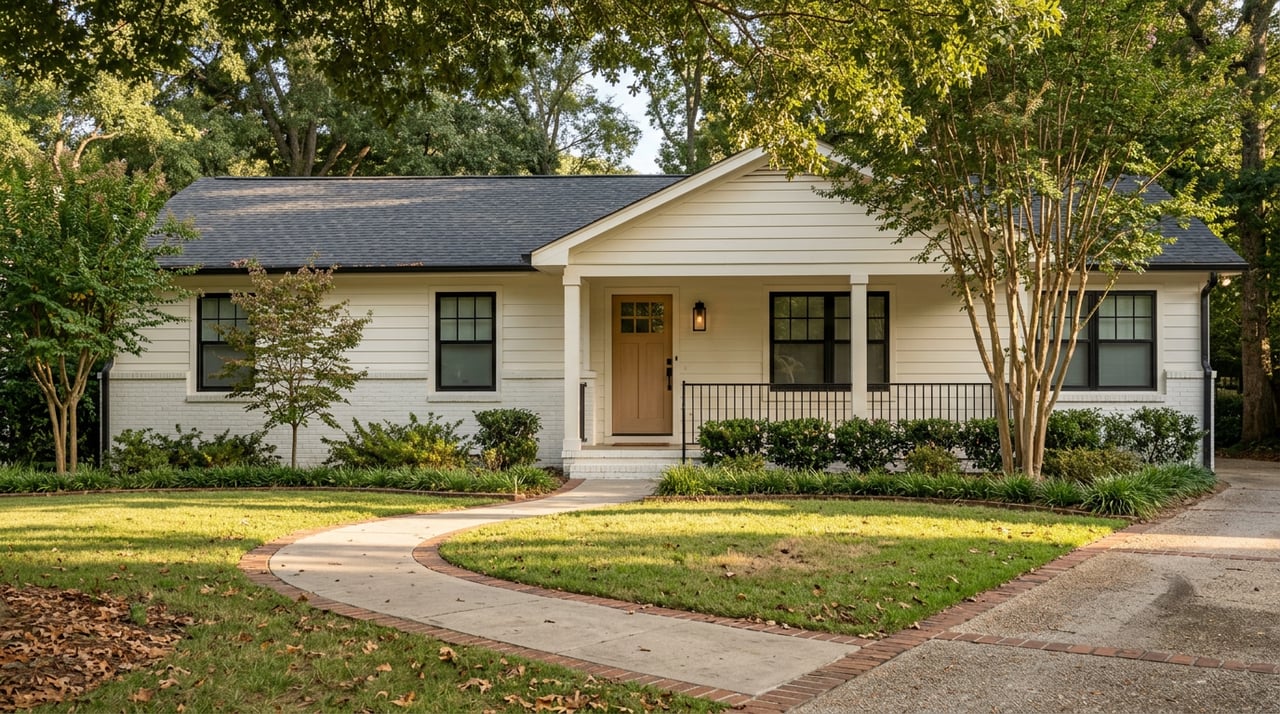
Trying to choose between a townhome and a single-family home in Duluth? You want the right space and lifestyle, but you also want a clear picture of what it really costs to live there each month. In this guide, you’ll see how taxes, HOA dues, insurance, utilities, and maintenance stack up for each option, plus a simple worked example you can adapt to any property. Let’s dive in.
How costs differ in Duluth
In Duluth and greater Gwinnett, townhomes often have a lower entry price compared with nearby detached homes in the same area. Many townhomes come with an HOA that covers exterior upkeep and amenities. Single-family homes usually offer more space and a private yard, with more of the maintenance on you. Price per square foot can be similar or even higher for townhomes in walkable locations or with upgraded finishes.
The right choice comes down to your monthly budget beyond the mortgage and how you want to live day to day.
Property taxes in Gwinnett
Georgia property taxes are based on an assessed value that is a percentage of fair market value. In most Georgia counties, including Gwinnett, the assessed value is typically 40 percent of fair market value. Your tax bill equals assessed value multiplied by the combined millage rate, divided by 1,000. If you live in the City of Duluth, the city millage is part of that combined rate, along with county and school components.
Basic formula: purchase price × 0.40 = assessed value. Then assessed value × (combined millage ÷ 1,000) = annual tax. If you qualify, homestead exemptions can reduce the taxable value on your primary residence. For current millage rates, exemptions, and billing details, check the official resources on the Gwinnett County website. You can also confirm city-specific taxes on the City of Duluth website.
HOA fees explained
Townhome communities usually have monthly HOA dues. These can range widely based on amenities and services. Fees often cover exterior maintenance, landscaping, common area insurance, reserves, and sometimes amenities like a pool or clubhouse. Some HOAs also include trash service or a share of water and sewer.
Detached homes may have no HOA at all. When they do, fees are often lower than denser townhome communities. Always review the HOA budget, reserve study, and meeting minutes to understand financial health, what’s covered by the master insurance policy, and whether there is a history of special assessments.
Insurance basics
Single-family owners typically carry an HO-3 policy that covers the dwelling, other structures, personal property, and liability. Townhome owners often carry an HO-6 policy for the interior and personal property, while the HOA’s master policy insures the building exterior and common elements. What the master policy covers varies by community, so you will want to confirm whether it is “walls-out” or more comprehensive.
Your premium depends on reconstruction costs, age and condition, deductible choices, and claims history. Flood coverage is separate. If a property is in a Special Flood Hazard Area and you use a federally backed loan, flood insurance is usually required. You can check any address on the FEMA Flood Map Service Center.
Utilities and efficiency
Expect the usual line items: electricity, natural gas if present, water and sewer, trash, and internet. Townhomes can be slightly more energy efficient thanks to shared walls that reduce heating and cooling demand. Some townhome HOAs include trash and a portion of water and sewer in monthly dues.
To estimate usage and rates, start with Georgia Power’s residential rate plans for electricity. For water and sewer billing policies, consult Gwinnett County Water Resources or the City of Duluth if you are inside city limits. Your HOA documents will note any utilities included in dues.
Maintenance and reserves
For single-family homes, a common rule of thumb is to budget 1 to 2 percent of the home’s value per year for maintenance and repairs. That covers items like roof, exterior painting or siding, driveway, fencing, and major systems. Townhome owners often have lower direct maintenance costs for exterior items because the HOA handles them, but those costs are baked into the HOA dues. You should still plan for interior systems like HVAC, water heater, and appliances.
Whatever you buy, it is smart to keep an emergency reserve for unexpected repairs or an HOA special assessment. Many owners set aside 1 to 3 percent of home value as a cushion or several months of total expenses.
Special assessments risk
Townhome owners share responsibility for buildings and common areas. If the HOA’s reserves are not adequate, owners may face special assessments to cover large projects like roof replacement or structural repairs. Before you buy, review the HOA’s financials, reserve study, and recent meeting minutes to gauge risk. Single-family owners do not face collective assessments, but they shoulder large repair bills individually and control timing and scope.
Lifestyle tradeoffs
- Space and yard: Single-family homes usually offer a private yard, more storage, and more separation from neighbors. Townhomes trade yard size for less exterior upkeep.
- Amenities and walkability: Many Duluth townhomes, especially near downtown, offer amenities and walkable access to dining and parks. That can reduce transportation and recreation costs. Detached homes often require more driving but provide garage space and larger lots.
- Noise and privacy: Shared walls in townhomes can mean more sound transfer than a detached home, depending on construction quality.
- Accessibility: Many townhomes are two or three stories. If minimizing stairs matters, a single-story ranch home or a townhome with a main-level suite may suit you better.
- Commuting: Duluth’s access to I-85 and regional express bus routes matters for commute costs and time. Living closer to your routine destinations can save both time and fuel.
Worked cost example
Below is a hypothetical, for-illustration-only comparison. Replace the placeholders with current local figures from the MLS, HOA disclosure package, Gwinnett County, Georgia Power, your water provider, and your insurance quotes.
Assumptions for illustration only:
- Townhome price: $325,000. HOA: $300 per month.
- Single-family price: $475,000. No HOA.
- Property tax calculation: assessed value at 40 percent of price, multiplied by a sample combined millage of 35 mills. Replace with the actual combined millage for your address.
- Insurance: HO-6 at $600 per year; HO-3 at $1,800 per year. Replace with quotes.
- Utilities: estimate based on typical usage. Replace with actuals for the property.
- Maintenance reserve: townhome owner sets aside 0.25 percent of value per year for interior systems; single-family owner sets aside 1 percent per year.
| Cost item | Townhome (illustrative) | Single-family (illustrative) |
|---|---|---|
| Purchase price | $325,000 | $475,000 |
| HOA dues | $300/mo | $0/mo |
| Property tax (est.) | Assessed value = $325,000 × 0.40 = $130,000. Annual tax = $130,000 × (35 ÷ 1,000) = $4,550, about $379/mo. | Assessed value = $475,000 × 0.40 = $190,000. Annual tax = $190,000 × (35 ÷ 1,000) = $6,650, about $554/mo. |
| Homeowners insurance (est.) | HO-6 $600/yr ≈ $50/mo | HO-3 $1,800/yr ≈ $150/mo |
| Utilities (est.) | $200/mo | $260/mo |
| Maintenance reserve | 0.25% of $325,000 = $813/yr ≈ $68/mo | 1% of $475,000 = $4,750/yr ≈ $396/mo |
| Total monthly, non-mortgage | About $997/mo | About $1,360/mo |
This table excludes your mortgage payment, down payment, and private mortgage insurance. It is a starting point. Your actual numbers will depend on the property’s location, HOA terms, insurance quotes, and your usage.
How to build your own comparison
- Pull recent sales or active comps in your target Duluth areas using MLS data.
- Request the HOA budget, master policy, and reserve study for any community you are considering.
- Confirm combined millage and exemptions on the Gwinnett County website.
- Price your electricity with Georgia Power’s rate plans.
- Check water and sewer billing with your provider via Gwinnett County Water Resources or the City of Duluth.
- Get written homeowners insurance quotes that reflect the HOA’s master policy coverage.
How to decide with confidence
If you want a lock-and-leave lifestyle with lower exterior chores, a townhome near downtown Duluth may be the right fit. If you value a larger yard, more privacy, and control over exterior projects, a single-family home may be worth the added maintenance.
Want numbers tailored to the exact homes you are eyeing? I’ll build a side-by-side cost of ownership comparison using current MLS data, HOA documents, insurance quotes, and local tax inputs. When you are ready, reach out to Mano Sells Homes LLC. Let’s connect.
FAQs
How much should I budget monthly beyond the mortgage in Duluth?
- Plan for property taxes, HOA dues if applicable, homeowners insurance, utilities, and a maintenance reserve. The illustrative example in this guide shows how those items can range from hundreds to over a thousand dollars per month, depending on the property.
What do townhome HOA fees usually cover in Duluth, GA?
- Many cover exterior maintenance, landscaping, common area insurance, reserves, and amenities like a pool or clubhouse. Some include trash and a portion of water and sewer. Always verify the budget and master policy to see what is included.
How do Gwinnett County property taxes work and can they be reduced?
- Taxes are based on 40 percent of fair market value times the combined millage rate. Primary residents may qualify for homestead exemptions that reduce taxable value. Confirm current millage and exemption details on the Gwinnett County website.
Who pays for roof replacement in a Duluth townhome community?
- In many communities, the HOA handles roof replacement as part of building exterior maintenance, funded by dues and reserves. Check the community covenants, bylaws, and budget to confirm responsibility and timing.
Is homeowners insurance typically lower for townhomes than single-family homes?
- Often yes, because a townhome owner’s HO-6 policy insures the interior and personal property while the HOA covers the exterior. Actual premiums depend on reconstruction costs, deductibles, and the HOA’s master policy.
How can I check if flood insurance is required for a Duluth property?
- Look up the address on the FEMA Flood Map Service Center. If it is in a Special Flood Hazard Area and you use a federally backed loan, flood insurance is typically required.