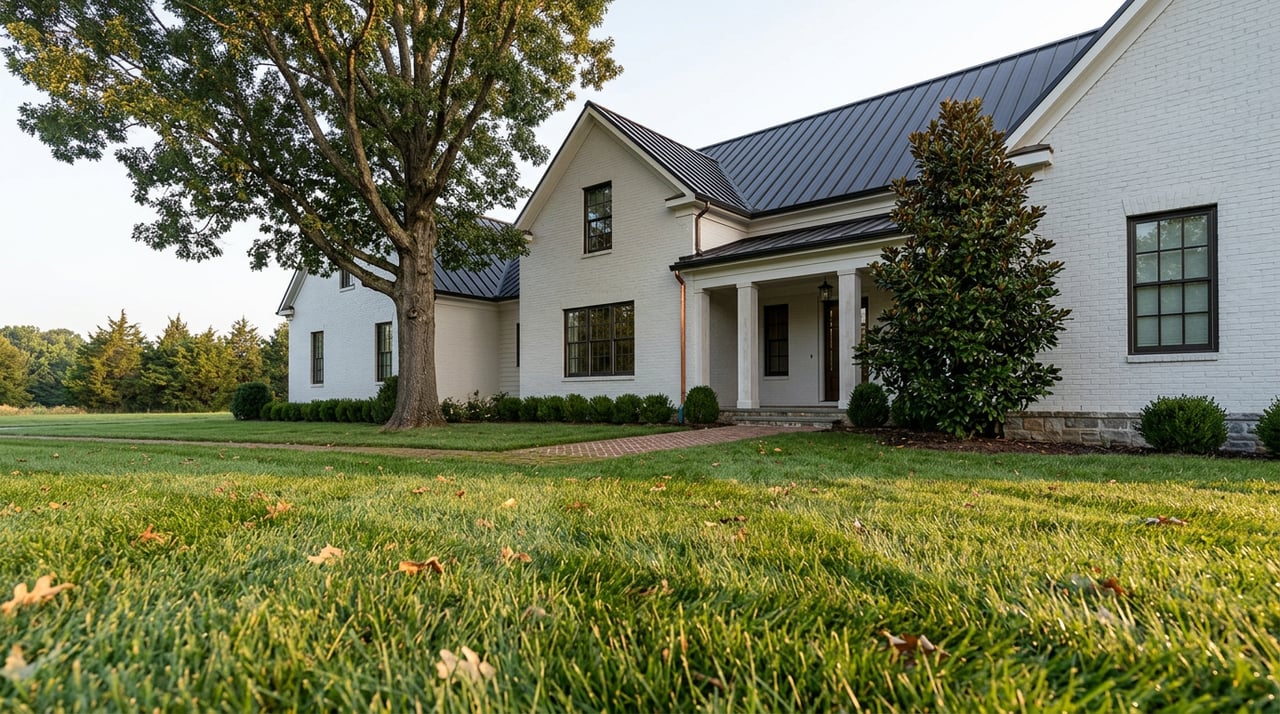
Why does a five-acre horse property on the west side of Milton sometimes carry a property tax bill that looks more like a bill for a house half its size, sitting on a quarter-acre lot in Alpharetta? The easy answer is "agricultural zoning." The real answer, as Acres explains, is a ten-year contract the current owner signed with the county tax assessor, and if you buy that property without reading it, you inherit the contract along with the barn.
That contract has a name: Georgia's Conservation Use Valuation Assessment, or CUVA. It's the single biggest reason Milton's equestrian estates can carry acreage most suburbs can't touch without acreage-sized tax bills to match. It's also the detail that trips up buyers, sellers, and sometimes their own agents, because CUVA doesn't belong to the person. It belongs to the parcel.
What the tax break actually does
CUVA lets landowners get their property assessed on what the land produces, not what a developer would pay for it. Instead of paying tax on 40% of fair market value, a qualifying property is taxed on 40% of its current use value, the value tied to how well the soil supports farming, timber. The Georgia Department of Revenue has been running the program since 1992, built specifically to keep rising land values from forcing longtime landowners to sell or subdivide just to cover the tax bill.
In exchange, the owner signs a covenant with the county promising to keep the land in that qualifying use for ten years. Miss that window and the tax break disappears. But breaking it early is where the real cost shows up.
The penalty travels with the deed, not the person
Here's the part that catches people off guard. If the covenant is breached, Georgia law requires the landowner to pay back twice the tax savings they collected over the life of the covenant, plus interest. That penalty gets recorded as a lien against the property itself, as the Forsyth County Board of Tax Assessors explains.
That single fact changes how you should read any Milton acreage listing. The covenant is filed with the Superior Court along with the deed, so it shows up in a title search. If you buy a property mid-covenant and then subdivide it, build well beyond agricultural use, or otherwise take it out of qualifying status, you're the one who owes the penalty, even if you never signed the original application. The obligation runs with the land for whatever's left of that ten-year term.
This is not a hypothetical. It's the exact reason title searches on Milton acreage need to specifically check for a recorded conservation use covenant, not just confirm clean title in the generic sense. A five-acre parcel that looks like a blank canvas for a buyer who wants to build a second structure, add a guest house, or split the lot for a family member might actually be seven years into a ten-year agricultural commitment that makes any of those plans expensive.
Why this matters more in Milton than almost anywhere else in North Fulton
Milton's zoning was built to keep this kind of land use possible. The city's AG-1 Agricultural District has historically required a minimum lot area of one acre on paved roads and three acres on unpaved roads, and the city later raised the minimum lot width for newly platted AG-1 parcels from 100 feet to 150 feet specifically to preserve the rural look. Milton consolidated these standards into a Unified Development Code in April 2024, but the underlying goal stayed the same: protect open space, equestrian use, and low density rather than let acreage get carved into standard suburban lots.
The city isn't just tolerating this pattern, it's actively steering more property into it. In October 2025, Milton's Equestrian Committee brought a set of large-lot incentive recommendations to City Council, defining a "large lot" as three acres or more and proposing changes that included letting owners rebuild existing barns and run-in sheds without a separate Board of Zoning Appeals approval, and potentially fast-tracking covered riding arenas on parcels of ten acres or larger. Those proposals came out of Milton's 2040 Comprehensive Plan and public feedback that consistently pointed toward one preference: keep the acreage intact rather than let it fill in.
What that means for a buyer is straightforward. Milton isn't going to make it easier to subdivide equestrian land over the next several years. It's going to keep making it easier to keep that land exactly as it is. If your plan involves eventually splitting a parcel or building past what a conservation covenant allows, you're working against the direction the city is actively pushing, not with it.
A quick way to see the three paths land can take
| Path | Tax basis | Term | What happens at resale |
|---|---|---|---|
| Fair market value (no covenant) | 40% of market value | None, standard annual assessment | No restriction transfers to the buyer |
| CUVA covenant | 40% of current use value | 10 years, renewable | Buyer inherits remaining term and breach liability |
Milton also offers a Transfer of Development Rights program, which works differently from CUVA.
The tax break and the zoning are two separate things. AG-1 zoning tells you what you're allowed to build. A CUVA covenant tells you what you've promised not to.
What this means if you're on either side of the transaction
If you're buying: ask for the covenant enrollment date before you get attached to a property, not after you're under contract. A parcel with two years left on its covenant carries a very different risk profile than one with eight years left. If your plans for the land don't clearly stay inside qualifying agricultural or conservation use, run the math on what a breach would actually cost against what you'd save by walking away from the covenant altogether.
If you're selling: know your own exposure. Disclosing the covenant status clearly protects you as much as it protects the buyer.
This is one reason the acreage tracts around Milton's western and northern edges behave differently in negotiations than the golf-front lots in neighborhoods like The Manor or White Columns, where CUVA rarely applies because the lots aren't in qualifying agricultural use to begin with. As of mid-2026, roughly a third of Milton's active listings sit above $1 million, and the citywide median has climbed to around $1.1 million. On the acreage side of that market, land-use status, not square footage, is often the variable actually moving price and negotiating leverage.
Where the trails and the land use intersect
None of this touches the everyday appeal that draws buyers to Milton's acreage in the first place. The city continues to prioritize multi-use trail connections through Crabapple and Deerfield, with an ongoing push to link into the regional Big Creek Greenway. That kind of connectivity matters for anyone weighing an equestrian property, since it extends riding and walking access well past the edge of a single parcel. It's just not a substitute for reading the covenant.
FAQ
Does a CUVA breach penalty transfer to a new owner who didn't sign the original covenant? Yes. The obligation to maintain qualifying use runs with the land for the remainder of the ten-year term.
Can I keep horses on my Milton property without enrolling in CUVA? Yes. CUVA is a tax election, not a requirement for keeping horses. AG-1 zoning governs whether equestrian use is allowed on a given parcel. CUVA is a separate, optional decision about how that land gets taxed.
What happens if I want to subdivide a parcel that's under an active CUVA covenant? Anyone considering a future split should confirm covenant status and remaining term before purchase, not after.
Milton's acreage market rewards buyers and sellers who read past the listing photos. If you're weighing an equestrian estate, a large-lot parcel, or want a clear read on what a specific property's covenant status means for your plans, Mano Sells Homes is happy to walk through it with you. Let's connect.
This article is general information, not legal, tax or financial advice. Consult a qualified professional about your situation.