Wondering if Johns Creek is the right fit for your move? If you are relocating to North Metro Atlanta, this city offers a practical mix of established neighborhoods, strong broadband coverage, major employment access, and a growing Town Center. The key is knowing what daily life really looks like before you choose an address. Let’s dive in.
Why Johns Creek stands out
Johns Creek is about 25 miles north of Atlanta in northeastern Fulton County and spans roughly 32 square miles. The city describes itself as a residential community with parks, connectivity, a growing Town Center, and a strong business base. It is also largely built out, which means future change will likely come through redevelopment and infill rather than big waves of brand-new expansion.
For you as a buyer, that usually means more established neighborhoods and fewer large vacant tracts than you might find in some outer-ring suburbs. It also means newer housing choices may show up in targeted mixed-use areas instead of spread evenly across the city.
What daily life feels like
Johns Creek is best understood as an established North Fulton suburb with car-first daily routines and an emerging mixed-use core. Much of the current retail pattern is still suburban and vehicle-oriented, but the city is actively building toward a more connected Town Center experience.
The city has nine parks, more than 400 acres of parkland, and nearly 100 miles of trails and sidewalks. That gives you a solid base for outdoor time, errands between activities, and weekend routines without leaving town.
One project worth watching is the Boardwalk at Town Center, a 20-acre park and pedestrian connector behind City Hall that is expected to open in summer 2026. It is part of the broader 192-acre Town Center plan designed to connect housing, parks, retail, office space, and public gathering areas.
Commute reality in Johns Creek
If you are moving here from a more transit-heavy metro, this is one of the biggest lifestyle differences to understand. Johns Creek residents rely heavily on cars, and there is no MARTA-operated service inside city limits. A prior commuter bus route to Doraville was also eliminated in 2020.
According to Census Reporter, the average commute time for Johns Creek residents is 30.1 minutes. The city also notes that SR 141 / Medlock Bridge Road and State Bridge Road carry some of the highest daily traffic volumes, with several corridors operating over capacity during peak times.
That does not make Johns Creek a poor commuter location. It simply means your experience will depend heavily on where you live, where you work, and when you travel.
Where many residents work
Johns Creek has an estimated 28,166 jobs, with major concentrations in professional and technical services, retail, finance, hospitality, and healthcare. Leading employers listed by the city include Alcon Laboratories, Emory Johns Creek Hospital, Macy's Systems and Technology, Atlanta Athletic Club, and Nordson.
The city profile also notes that many residents work in close proximity to GA 400 and primarily within Atlanta, Alpharetta, Sandy Springs, and Roswell. Office space within Johns Creek is concentrated in Tech Park along SR 141 / Medlock Bridge Road.
What this means for your move
Johns Creek is often a better fit if you work on the north side of Metro Atlanta or have a hybrid schedule. If you need rail transit or a short, predictable trip into central Atlanta every day, you will want to evaluate that carefully before committing.
The city is also improving road infrastructure, including McGinnis Ferry Road widening and Medlock Bridge Road intersection work. Even with those projects underway, it is smart to test your likely route during weekday rush hours.
Housing options and pricing
Johns Creek sits in the middle-to-upper price range among North Metro suburbs. Current data in the research report places the city's typical home value at $684,152, while Redfin reports a February 2026 median sale price of $690K and Census Reporter lists a median owner-occupied home value of $679,200.
The local pace also matters. Zillow reports homes go pending in about 34 days, which suggests you should be prepared to move quickly when a well-priced listing hits the market.
What types of homes you will find
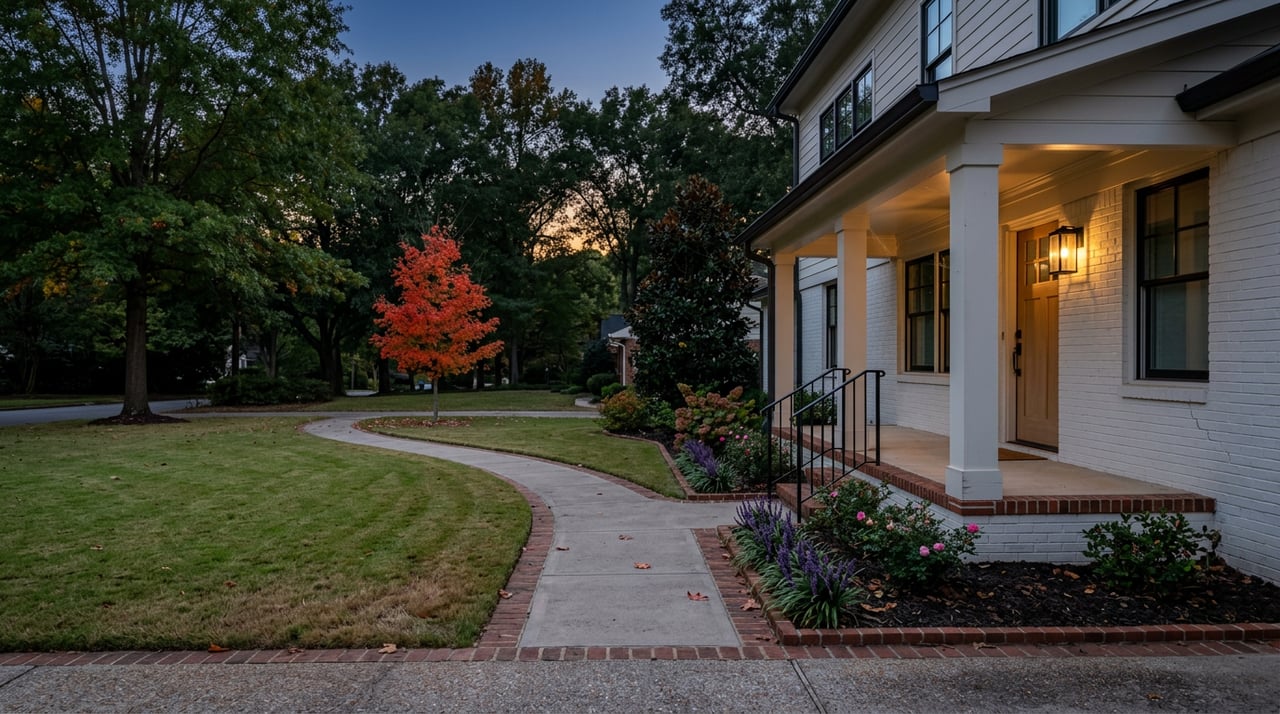
The housing stock in Johns Creek is predominantly single-family detached. The city profile says 77% of homes are owner-occupied, vacancy is low at 3.9%, and about 75% of houses were built between 1980 and 2000.
That means a lot of your options may be in established subdivisions with mature landscaping, familiar suburban layouts, and varying levels of updates. If you are hoping for large-scale new construction on brand-new lots, supply is more limited because Johns Creek is largely built out.
Attached housing and new development
If you prefer lower-maintenance living, newer attached homes, or a more mixed-use setting, keep an eye on the Town Center pipeline. The city is adding more attached and multifamily options through redevelopment, including major redevelopment projects such as Medley.
According to the city profile, Medley is a 43-acre mixed-use project planned to include 750 multifamily residences and 133 townhomes. For relocators who want a more urban feel without moving intown, that is one of the most relevant future housing trends in Johns Creek.
How Johns Creek compares nearby
Compared with nearby North Atlanta communities in the research report, Johns Creek prices sit slightly below Alpharetta, slightly above Sandy Springs, above Roswell, and well below Milton. That can make Johns Creek appealing if you want North Fulton access and established suburban housing without stretching into the highest price tier nearby.
Your best value often depends on your priorities. If you care most about lot size, subdivision feel, and established inventory, Johns Creek may line up well. If you want the newest walkable district product, your search may need to focus more tightly on redevelopment areas and upcoming inventory.
Broadband and hybrid work
For many relocators, internet reliability is no longer optional. Johns Creek says more than 99.5% of the city is served by broadband and generally has access to at least two providers.
That is a strong plus if you work from home full-time or split time between home and office. Still, address-level verification matters, especially in older neighborhoods, so it is wise to confirm service options before you finalize a purchase.
A practical relocation checklist
If you are moving to Johns Creek from out of state or from another part of Georgia, these are some of the most useful steps to take before you buy:
- Test your likely commute during weekday peak hours, especially near SR 141 / Medlock Bridge Road, State Bridge Road, or McGinnis Ferry Road.
- Confirm internet service at the exact address, even with the city's strong overall broadband coverage.
- Review property tax estimates and timelines before making an offer.
- Use city tools to check nearby parks, construction projects, services, and other location details.
- Watch Town Center and redevelopment plans if walkability or newer housing matters to you.
For remote planning, the city's Resident Resource Guide can be especially helpful. It lets you explore information tied to a specific address, including parks, services, libraries, elected officials, and more.
Property taxes and exemptions
Relocating buyers often overlook this step until late in the process. Property taxes in Johns Creek are handled through the Fulton County Board of Assessors and the city's property tax resources.
If you plan to make the home your primary residence, timing matters. The research report notes that homeowners must own and occupy the home as of January 1 to qualify for homestead exemptions, and most exemption applications are due by April 1.
Is Johns Creek a good fit for you?
Johns Creek can be a strong choice if you want an established North Fulton suburb, access to north-side job centers, solid broadband, and growing mixed-use amenities. It may be especially appealing if you value established single-family neighborhoods and want to stay connected to Alpharetta, Roswell, Sandy Springs, and other North Metro hubs.
It may be less ideal if you need in-city rail transit or want a fully urban, walk-to-everything environment today. The good news is that with the right neighborhood and a realistic plan for commuting, Johns Creek can offer a very practical landing spot for your next move.
If you want help narrowing down neighborhoods, comparing home styles, or planning a smooth move into North Fulton, Mano Sells Homes LLC would love to help you make a confident move.
FAQs
What is the commute like when relocating to Johns Creek, GA?
- Johns Creek is largely car-dependent, with an average commute time of 30.1 minutes, no MARTA service inside city limits, and heavier traffic on roads like SR 141 / Medlock Bridge Road and State Bridge Road.
What types of homes are common in Johns Creek, GA?
- Johns Creek mostly offers single-family detached homes in established neighborhoods, with much of the housing stock built between 1980 and 2000, plus a growing number of attached options through redevelopment.
Is Johns Creek, GA good for remote workers?
- Johns Creek can work well for remote and hybrid workers because the city says more than 99.5% of addresses are served by broadband and generally have access to at least two providers.
Are there walkable areas in Johns Creek, GA?
- Johns Creek is still mostly suburban and car-oriented today, but the Town Center plan, Boardwalk at Town Center, and Medley redevelopment are intended to add more walkable housing, retail, and public spaces.
What should buyers check before moving to Johns Creek, GA?
- Before buying, you should test the commute, verify internet service at the exact address, review property tax estimates and exemption timing, and use the city's address-based tools to check nearby amenities and projects.