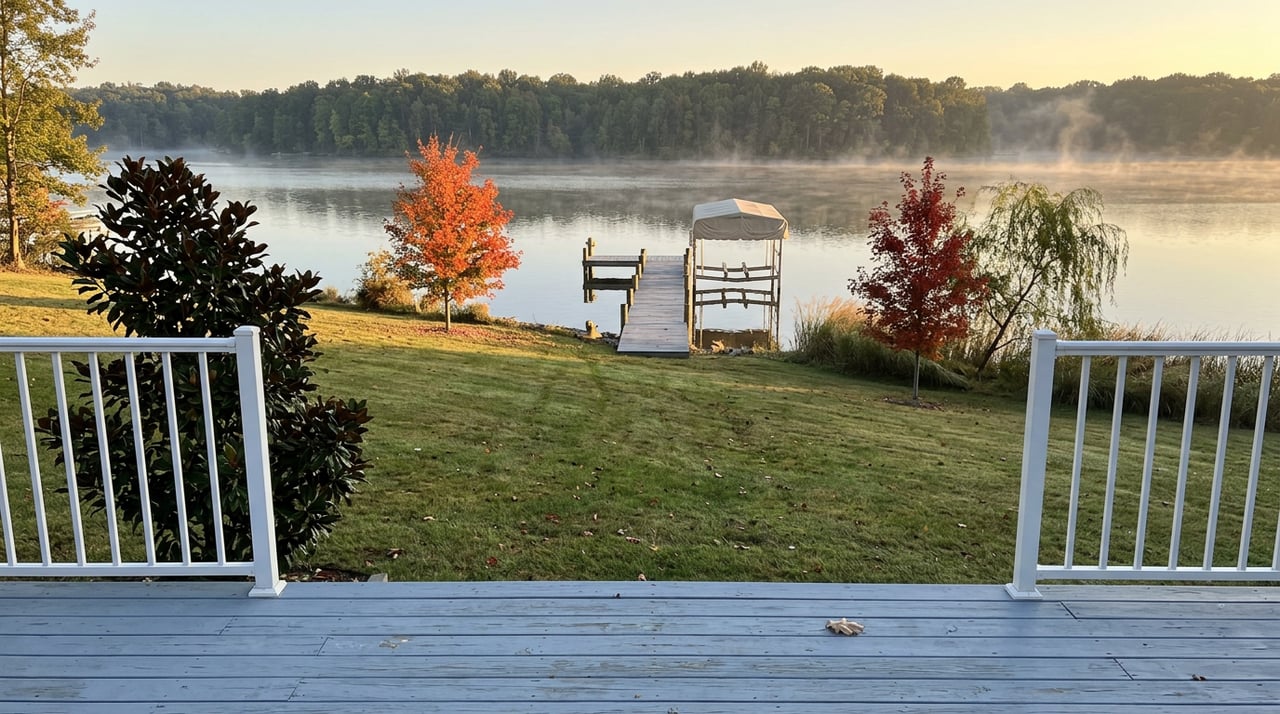
A closing on Lake Lanier can go smoothly for weeks and then stall on a single line item nobody flagged during showings: the dock. Buyers assume that a private dock, like a hot tub or a finished basement, simply comes with the house. On Lake Lanier it does not. The moment the deed changes hands, the existing dock permit expires. What the seller had is gone. What the buyer gets is the right to apply for a new one in their own name, and that application only works if the Army Corps of Engineers agrees the parcel still qualifies.
That single fact is the reason two homes that look identical on a tour, same square footage, same finish level, same shoreline, can sell hundreds of thousands of dollars apart. The gap is not really about the house. It is about a piece of federal paperwork attached to it.
The Permit Is A License, Not A Feature
Lake Lanier sits on federally owned land. The U.S. Army Corps of Engineers, Mobile District, manages the shoreline under the Lake Sidney Lanier Shoreline Management Plan, and the strip of ground between a property line and the waterline generally belongs to the Corps, not the homeowner. A private dock on that ground exists because the Corps issued a Shoreline Use Permit, and that permit is a personal license tied to the person who applied for it, not a right that runs with the land.
That is why the permit dies at closing. A buyer has to file a Change of Owner submission with the Corps' Buford Project Office, which requires the recorded deed, a site drawing of the dock and shoreline, and, if the dock has power, an Exhibit C electrical certification signed by a licensed electrician confirming the wiring meets National Electric Code standards. A ranger then inspects the facility for deficiencies before the new permit is issued, typically covering a five year term. Budget on the process taking six to eight weeks once a complete file is submitted, and expect the electrical certification alone to run $300 to $600 if the dock needs new documentation, plus an administrative renewal fee in the hundreds of dollars for the reissued permit.
None of that is a rubber stamp. The Corps reissues a permit under today's standards, not the standards in place when the dock was originally built. A footprint or gangway length that was fine in 1985 is not guaranteed to pass in 2026, and a buyer who assumes otherwise can find themselves negotiating a modification or a removal after they already own the property.
Why The Math Doesn't Work Like A Normal Amenity
On most lakes, a dock adds value the way a pool or a finished patio does: it is nice to have, and buyers will pay a premium proportional to how nice it is. Lake Lanier's dock market does not behave that way because supply is fixed. In 2004, the Corps completed an Environmental Impact Statement that set a hard ceiling on private boat docks lake-wide, capping the total at 10,615. A 2009 lottery allocated the remaining slots to the backlog of applicants at the time, and the program has run close to full ever since. When a permit is revoked or simply not renewed, it does not stay attached to the house. It goes back into a waiting list that the Corps works through slowly, and even the rare batch of returned permits tends to be absorbed by applicants who have been waiting for years.
That scarcity shows up directly in sale prices. Georgia MLS data from March 2026 put the median closed price for waterfront homes with a transferable private dock permit at roughly $1,250,000 across the lake's core ZIP codes, covering Buford, Gainesville, Flowery Branch, and Cumming addresses. Homes in those same ZIP codes with lake access but no permitted private dock, meaning a shared community slip or simply proximity to the water, closed at a median near $675,000 over the same window.
| Access Type | Median Closed Price (March 2026) |
|---|---|
| Private dock, transferable USACE permit | ~$1,250,000 |
| Lake access, no private dock permit | ~$675,000 |
That's a spread of roughly $575,000 between two categories of home that can otherwise sit on the same street. It is not paying for an extra $575,000 of house. It is paying for a license the Corps is not issuing anymore.
Not Every Permit Buys The Same Thing
The dock premium is not one number either. Older platform docks, which the Corps no longer issues at all, are typically grandfathered onto a property and limited by a 50 foot setback rule that makes them workable mainly for fishing or sunbathing rather than mooring a boat. Single slip permits are the baseline for most private dock properties. Double slip and covered party dock authorizations, with larger footprints and upper decks, are rarer under the cap and carry the strongest premium of the group. A buyer comparing two "has a dock" listings needs to know which category they are actually looking at, because the permit class can move the price more than the kitchen finishes do.
The Tax Line That Changes The Comparison
Lake Lanier's shoreline crosses five counties, and the county a home sits in decides more than the school assignment. Effective property tax rates on the lake run from roughly 1.18 percent in Forsyth County down to roughly 0.68 percent in Dawson County. On a $750,000 home, that difference works out to somewhere in the neighborhood of $3,750 a year, every year the owner holds the property. Buyers weighing a shorter commute and Forsyth's school district against a quieter, more secluded stretch of Dawson County shoreline are not just choosing a view. They are choosing a tax bill that compounds over the life of ownership.
What The Lake Is Doing Right Now
As of mid-September 2026, the lake sits at roughly 1,065 feet, about six feet below the full summer pool elevation of 1,071 feet, based on the USGS gauge at Buford Dam. That is close to where the Corps typically begins its seasonal drawdown, easing the lake down toward winter pool over the fall and winter months as part of its flood control operations. For a buyer touring homes right now, that six foot gap matters most in the back of coves and on the shallower Dawson County arms, where water can retreat far enough to leave a dock high and dry. Depth holds up better on peninsulas and along the main channel stretches near Buford Dam and Aqualand Marina on the south end, the north Forsyth shoreline near Browns Bridge Road, and the Hall County shoreline above Holiday Marina and Sunrise Cove Marina. A listing photo taken at full pool in June tells a buyer very little about what that same dock looks like on a September afternoon.
A Market Splitting Into Two Speeds
Lake-wide inventory sat at 7.7 months in the second quarter of 2026, which puts the market in buyer territory, and 43 percent of homes that closed during that stretch needed at least one price reduction to get there. That sounds like a soft market on its face. But homes that were priced correctly and came with clean documentation from day one closed in a median of 13 days at 94.5 percent or more of list price. The homes that needed a reduction took roughly seven months longer to close. Two markets, one lake, and the difference between them has less to do with the water and more to do with whether the seller could hand a buyer a clean permit file before the tour ended.
Straight Answers Before You Write An Offer
Does the seller's dock permit transfer to me automatically at closing? No. The permit is a personal USACE license that expires when the deed changes hands. You file for a new one in your own name through the Change of Owner process, and the outcome depends on the Corps confirming the facility still meets current standards.
Can I add a private dock to a Lake Lanier home that doesn't already have one? On most parcels, no. The lake-wide cap of 10,615 permits has been reached for years, new permits are not being issued to properties without one, and the waitlist offers no guaranteed timeline for anyone hoping to get on it.
What's the practical difference between a platform dock and a single slip dock? A platform dock is an older, grandfathered structure the Corps no longer issues, generally limited to fishing or sitting rather than mooring a boat because of setback rules. A single slip permit supports an actual boat and is the more common baseline for private dock homes, which is part of why platform dock properties tend to sell for less.
If you're comparing a Lake Lanier listing against homes in Cumming, Suwanee, or the rest of North Atlanta, the permit file matters as much as the price sheet. Before you write an offer on anything with a dock, get the permit number, the classification, and the electrical documentation in hand. That's the kind of verification Mano Sells Homes walks clients through before contract, not after. Let's connect.